All Plasma5 packages have been removed from cooker, will be removed from Rome with the next repo sync, and will be removed from Rock with the next release.
Not sure if the apps will still run in an X session or not. Maybe someone will create something like xwayland to run wayland-only app under X11. We already offer xfce, lxqt, and i3, and have community members working on cinnamon and TDE.
Thanks, Lee.
I’m leaning towards xfce, it seems mature, stable and has lots of options for customisation. Hopefully, by the time Rock 7 comes out, i’ll be able to use it with XLibre.
Too bad KDE is ditching x11, I like KDE.
Excuse me, please, for me just piggybacking onto this thread.
I have a similar question as this thread’s opener:
Is November’s new major upgrade to OpenMandriva ROME (Rolling) even possible for users currently still on KDE Plasma 5@X11 in the first place? Can a ROME Plasma 5 PC system just upgrade to November 9th ROME Plasma 6?
Or is there no way for such an upgrade? Do these people have to begin anew with a fresh ISO installation?
I want to find out before daring/risking an upgrade attempt.
Can you afford to lose ALL the data stored on that system? Make a backup!
Do you use a separate partition/drive for your stuff? Or is everything stored in your $HOME (in the same / partition)?
Do you have a current backup? If “No” Make a backup!
Fwiw, in my “ideal” world, all your data is stored on a separate drive and your $HOME is nothing but configs and symlinks. Failing that a separate partition on the same drive.
Remember that many plasma settings are also stored in $HOME .
Remember also, that things like your browser bookmarks, passwords, etc. is included in “your stuff”
Tools like rsync / LuckyBackup are great for backing up files (and even your entire $HOME). And while Timeshift can do a good job on the system files, I don’t know that I would entirely trust it for this.
I would use a tool like Foxclone to make actual partition images (including of uefi, boot, root, $HOME ). This way if things blow up, you just copy the partitions back and it’s as if you never did anything (rather that waste time trying to fix it).
Once that is done boot directly to the cli (bypassing the gui entirely) and do the update.
I would say that after some brief testing today, it may be better to migrate to Plasma 6 before you dsync ROME. This may have some help for that, but read the whole thing.
There was another topic somewhere that may also help.
Meanwhile I had my first contact with/touch onto Plasma 6 on a fully dsync-ed OMV. Now I would like to learn whether the following behaviour is Plasma 6-native or caused by bugs/errors.
Almost every software window opened appears on the upper left corner of the screen. Moving them to elsewhere only affects current program run/instance/window lifetime; as soon as the program is terminated, new windows respawn at he upper left corner. So basically, most windows positions are permanently reset, while windows geometry (length, width, height) gets saved/remembered. I tried creating some Plasma 6 settings on it (there were no rules before), but their small impact was not what I wish for and know from Plasma 5.
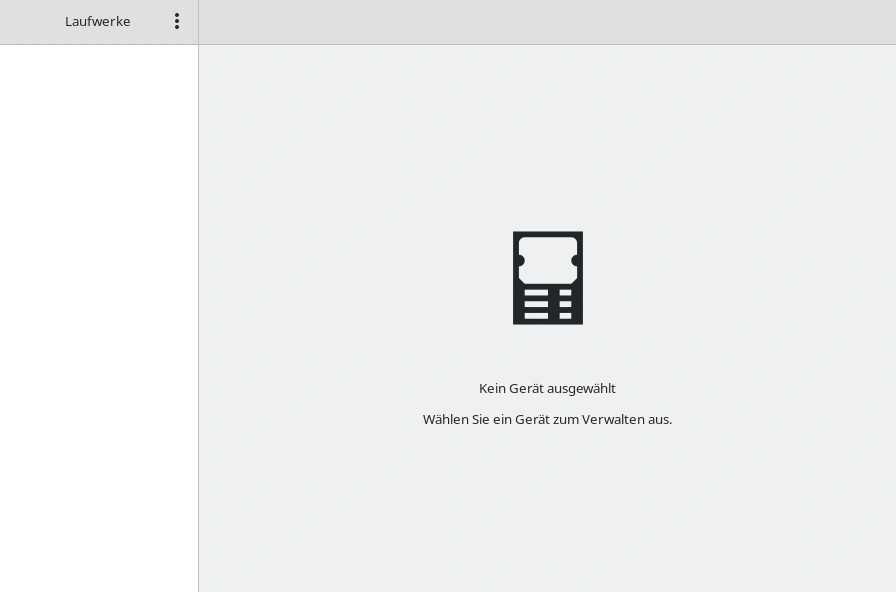
The application gnome-disk-utility aka gnome-disks starts empty, i. e. it shows no storage devices, drives or partitions. I could not observe any change over its runtime or when starting that application anew. There is no error message, warning or anything. The program windows appears largely empty without any usable info.
A number of icons are broken, seemingly due to the icon set being unmaintained or pulled offline or something. Of course that cannot be changed. But I wonder whether it is possible to use a second icon set/design/… as a fallback only when the primary icon set/design/… is missing an icon.
The task bar/main bar got uplifted in idle; some pixels below it are unused (showing the wallpaper’s edge area). Whenever a somewhat-fullscreen application like a web browser is started, the bar gets lowered to the screen’s lower edge like on Plasma 5. But closing the aforementioned application (web browser) causes the task bar/main bar to uplift itself by those few pixels. I think I can get used to this mechanism over a longer time, but I would like to know if there is a way to disable it. I prefer my task bar/main bar on the very “ground” of the screen at all the time.
The “Start menu”-esque application starter is translucid/glassy. I could not find a setting to disable that effect, i. e. making it opaque. (At first, task bar/main bar also was transparent, but IIRC I was able to make it opaque.)
While using latest OMV@Plasma 6, the bash history was deleted a number of times, maybe in connection with OS restarts.
t. b. c.
.
Does, by chance, anyone have some info/experience on my observations – whether validating/concurring or disproving/dissenting?
Right click in the taskbar. Select “Show Panel Configuration.” Under “Style” you can turn on “Floating” (which behaves as you describe) or turn it off (which sticks the panel to the bottom of the screen.)
I am unable to reproduce anything else you mentioned.
You got a hit on it; thank you. (Ironically, I had even opened the config windows multiple times before, but somehow I was able to overlook the “floating” entry.)
As far as I know, I do not use anything Wayland. … Oh, OMV’s Info Center/“About this system” says otherwise.
That’s the empty gnome-disks window. Just in case, I tried opening it via Konsole command line, what led to the following dbind warning:
$ sudo gnome-disks
(gnome-disks:16470): dbind-WARNING **: 00:36:07.206: Couldn't connect to accessibility bus: Failed to connect to socket /run/user/0/at-spi/bus_0: File or directory not found
After that warning/hint I thought maybe some “at-spi” repo package might be missing. So to be completely sure:
Installing and reinstalling worked seemingly flawlessly. Then again:
$ sudo gnome-disks
(gnome-disks:17698): dbind-WARNING **: 00:40:56.151: Couldn't connect to accessibility bus: Failed to connect to socket /run/user/0/at-spi/bus_0: File or directory not found
Everything you have described I’ve run into (I’m running Rock) and they’re all plasma/kde.
The complaints are all over the KDE forum. Especially for multiple monitors. No real solutions either - though I hear Sonic and TDE might be accidentally fixing them.
The closest I’ve got is under window management in settings:
Window position centered and uncheck window remembers.